Replacing an existing driveway? It depends.
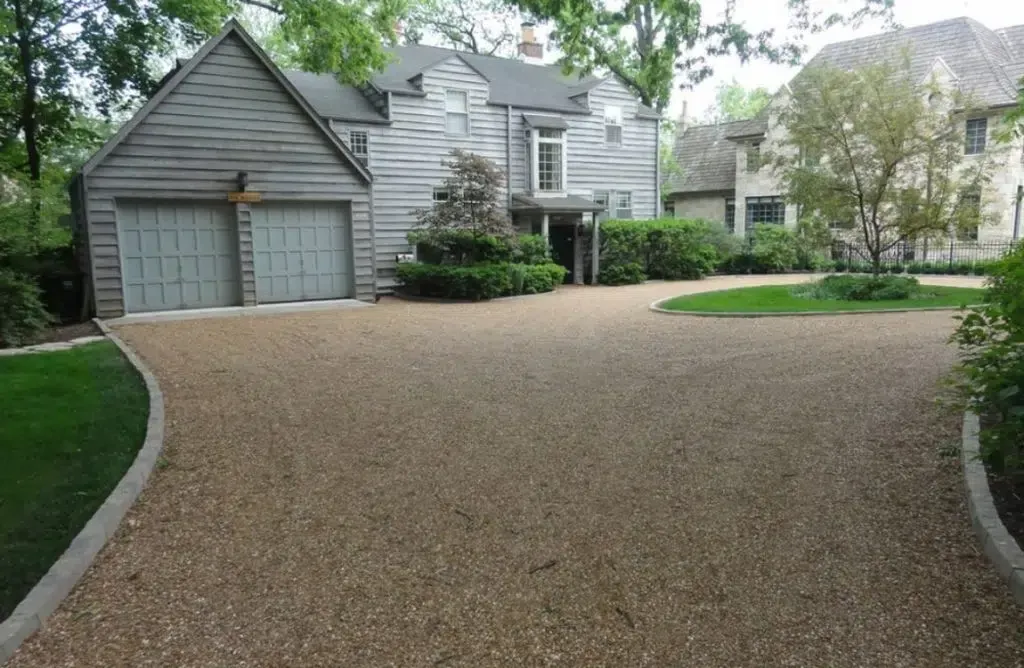
This is where homeowners most often assume they're in the clear and sometimes aren't. In many areas, replacing a driveway with the same material, same dimensions, and same location is considered routine maintenance and doesn't require a permit. But the moment you change anything significant — widening the driveway, changing the material from gravel to concrete, altering the access point to the street, or adding a second entrance — you've crossed into permit territory. Expanding coverage also triggers zoning rules in many municipalities, particularly rules about maximum impervious surface coverage on a residential lot. Concrete and asphalt prevent water from absorbing into the ground, and many local codes cap how much of your lot can be covered by impervious materials.
The road connection matters enormously.
One aspect of permits needed for driveway installation that surprises homeowners is that it often isn't just your local municipality involved. If your driveway connects to a state-maintained road rather than a county or city road, you may need a permit from the state department of transportation in addition to — or instead of — local approval. This is common in rural areas where properties border state highways. The state DOT has its own requirements around sight lines, driveway width, angle of entry, drainage, and distance from intersections that exist entirely independently of what your town requires.
The application process is more involved than most people expect.
Once you've confirmed a permit is required, the application typically asks for a site plan showing the driveway's dimensions and location on the property, the materials you plan to use, and a drainage plan demonstrating that stormwater won't be directed onto neighboring properties or into the road. Some jurisdictions require a fee, some require pre-construction inspections, and most require a final inspection before the permit is officially closed. Turnaround times vary widely — straightforward applications in small municipalities might be approved in a week, while more complex applications in busy urban counties can take several weeks.
HOA rules add another layer.
If you live in a community with a homeowners association, permits from the municipality are only part of the picture. Most HOAs have their own approval process for exterior changes including driveways, and they often have specific requirements around materials, colors, width, and design that go beyond what local code requires. Getting municipal permit approval doesn't automatically satisfy HOA requirements, and vice versa. Both need to be addressed before work begins.
What happens if you skip it?
Skipping the permit process isn't a minor technical violation. If an inspector or neighbor flags the unpermitted work, you may be required to stop construction mid-project, apply retroactively, or in some cases demolish the work and start over in compliance. It can also create complications when you sell — unpermitted improvements show up during title searches and can delay or derail a sale.
The smartest first step before any driveway project is a phone call to your local building department. Describe what you're planning, confirm what's required, and get the permit process started before any material is ordered or any contractor is booked. It adds time upfront, but it removes a significant amount of risk from the rest of the project.