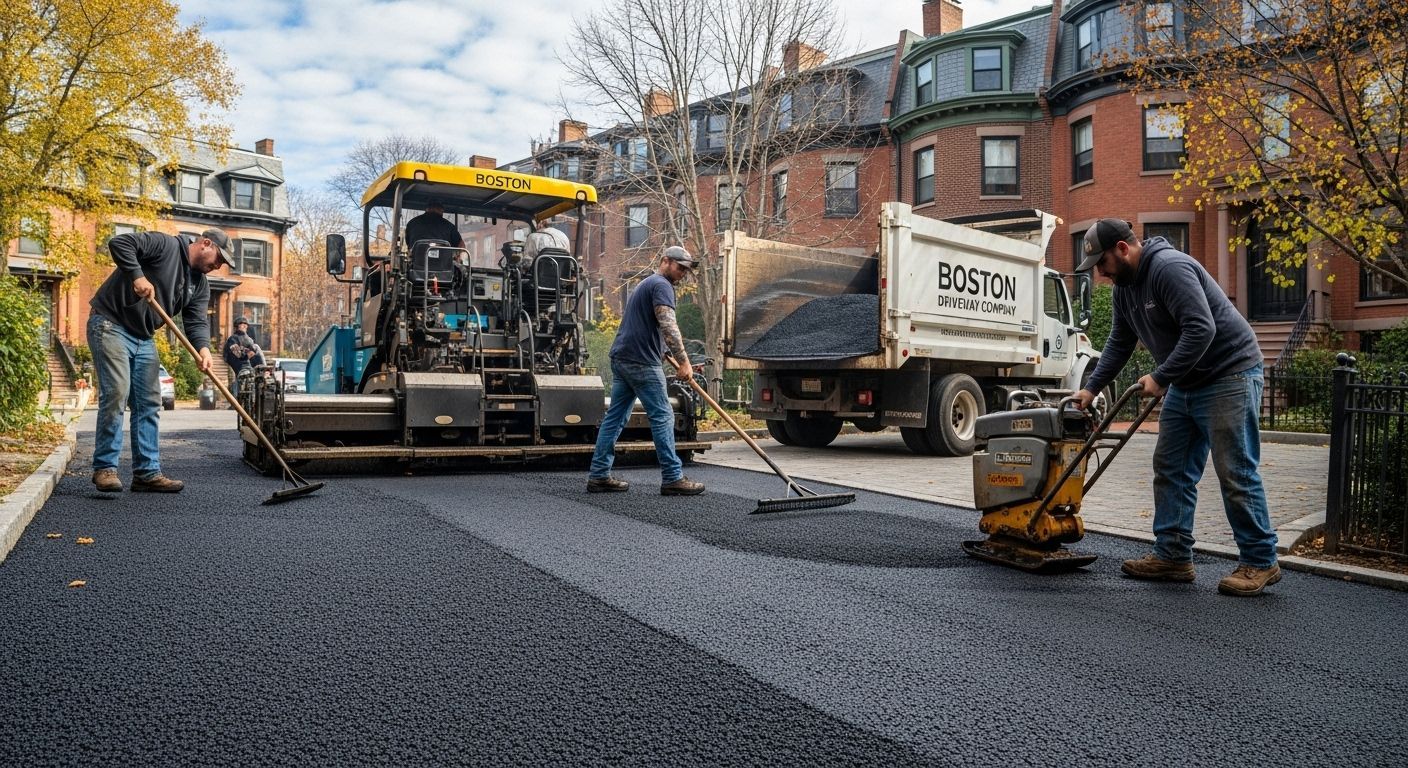
Start with asphalt, because it's the more dramatically affected of the two. Asphalt is a petroleum-based material — it's essentially aggregate held together with bitumen, a tar-like binder derived from crude oil. That binder is what gives asphalt its flexibility and cohesion, and it's also what UV radiation attacks. Ultraviolet light breaks down the chemical bonds in bitumen over time, a process called oxidation, which causes the binder to dry out and become brittle. The surface loses its dark color first — fresh asphalt is nearly black, oxidized asphalt turns gray — and then it starts to lose its structural integrity. You get surface raveling, where small stones loosen from the matrix, followed by cracking as the brittle material can no longer flex with temperature changes.
In an extreme heat climate, this process accelerates significantly compared to what you'd see in a cooler region.
The fix for asphalt oxidation is sealcoating, and timing matters. The window to catch asphalt before UV damage becomes structural is when the surface is gray but not yet cracking. A quality coal tar or asphalt-based sealer replenishes the surface, slows further oxidation, and extends the life of the driveway meaningfully. Most professionals recommend sealing every two to three years in moderate climates and every one to two years in hot, high-UV environments. Letting it go past the point of surface cracking means the sealer can't fill what's already broken — at that stage you're into crack filling and patching before sealing, which is more involved and less effective than staying ahead of the deterioration.