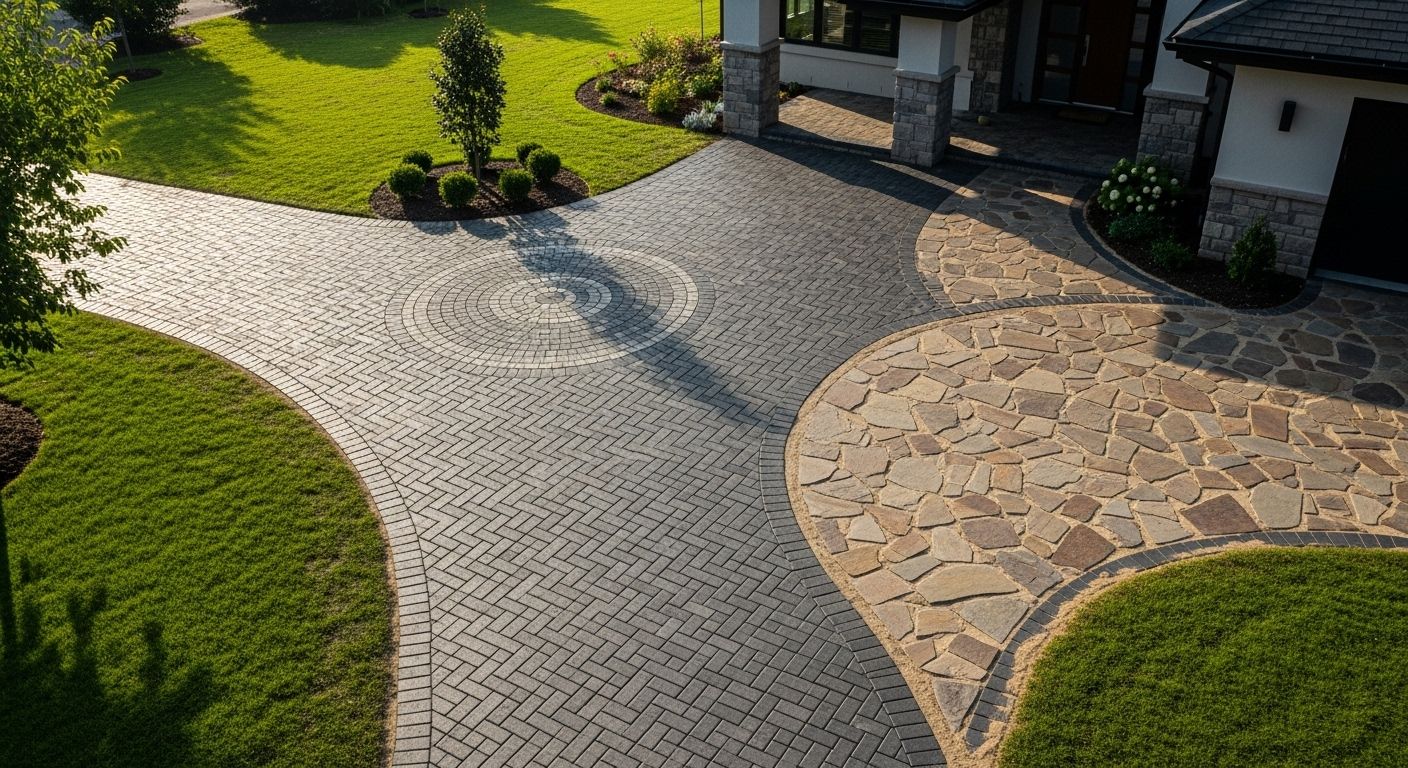
Color Options That Work
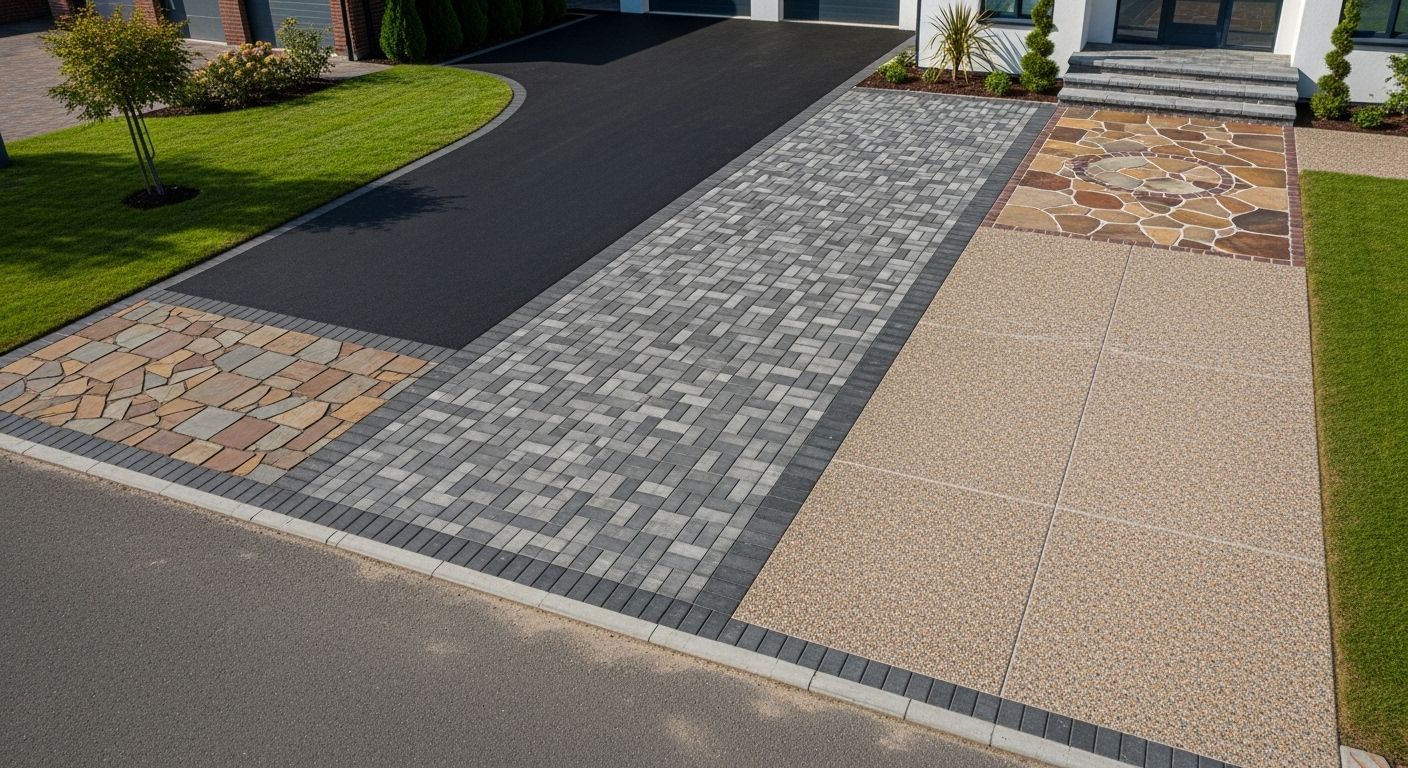
Exposed aggregate is one of the most naturally suited finishes for desert climates. It reveals the stone and sand within the concrete mix, which you can specify in warm desert tones — buff, sandstone, rust, or tan. The texture also gives excellent traction and breaks up the visual monotony of a flat slab. It tends to stay a bit cooler than smooth sealed concrete because the surface texture reduces direct solar absorption slightly.
Integral color means the pigment is mixed throughout the concrete, not just applied on top. This is a more durable approach than surface staining because the color doesn't wear off with traffic or UV exposure. Earth-tone pigments — iron oxide-based reds, yellows, and browns — are the most stable in intense sunlight and look completely natural in a desert setting.
Stamped concrete lets you add texture that mimics flagstone, slate, or tile, and pairs well with integral color or a surface stain. Done well, it elevates a driveway into something that looks custom and expensive. Done poorly, it looks like fake stone. The finish matters — an antiquing wash applied over the stamped texture adds depth and realism that flat color alone can't achieve.
Concrete stain (acid-based or water-based) is a more affordable way to add color to an existing slab. Acid stains react chemically with the concrete to produce mottled, variegated tones that look organic and natural. They don't sit on top like paint — they become part of the surface. The downside is less control over the final color, and they require sealing to hold up against weather and traffic.
Finish and Sheen — Don't Overlook This Part
The sealer you choose affects how the driveway reads as much as the color does. High-gloss sealers look wet and can feel out of place in a natural desert landscape. A matte or low-sheen sealer keeps the surface looking earthy and grounded. Satin is a middle ground that adds a little depth without the plasticky shine.
Any sealed surface in the desert also needs UV-resistant chemistry in the sealer — standard sealers break down fast under intense sun and will need reapplication much sooner than the manufacturer suggests.
Matching the House
The most common mistake is picking a driveway color in isolation. The right driveway color finish for a desert home ties back to the exterior paint or stucco, the roof material, the hardscape around the entry, and even the color of any decomposed granite or gravel in the landscaping. Pull a chip from your stucco or siding and hold it against color samples before committing. What looks warm and cohesive in a showroom can clash badly once it's surrounded by your actual home.
If the exterior is a warm buff or adobe tone, lean toward similar warm neutrals with a hint of red or yellow. If the house is painted a cooler gray or white, you have more flexibility — a sandy greige or a light exposed aggregate keeps it from feeling cold.
The Bottom Line
A driveway doesn't have to be an afterthought. In a desert setting especially, the right color and finish can make the whole front of a property feel pulled together and intentional. Start with heat reflectivity and durability, then layer in color choices that connect to the house and landscape. The result is a surface that handles the climate and looks like it was always supposed to be there.